
How to clean a fly swatter after a backyard cookout


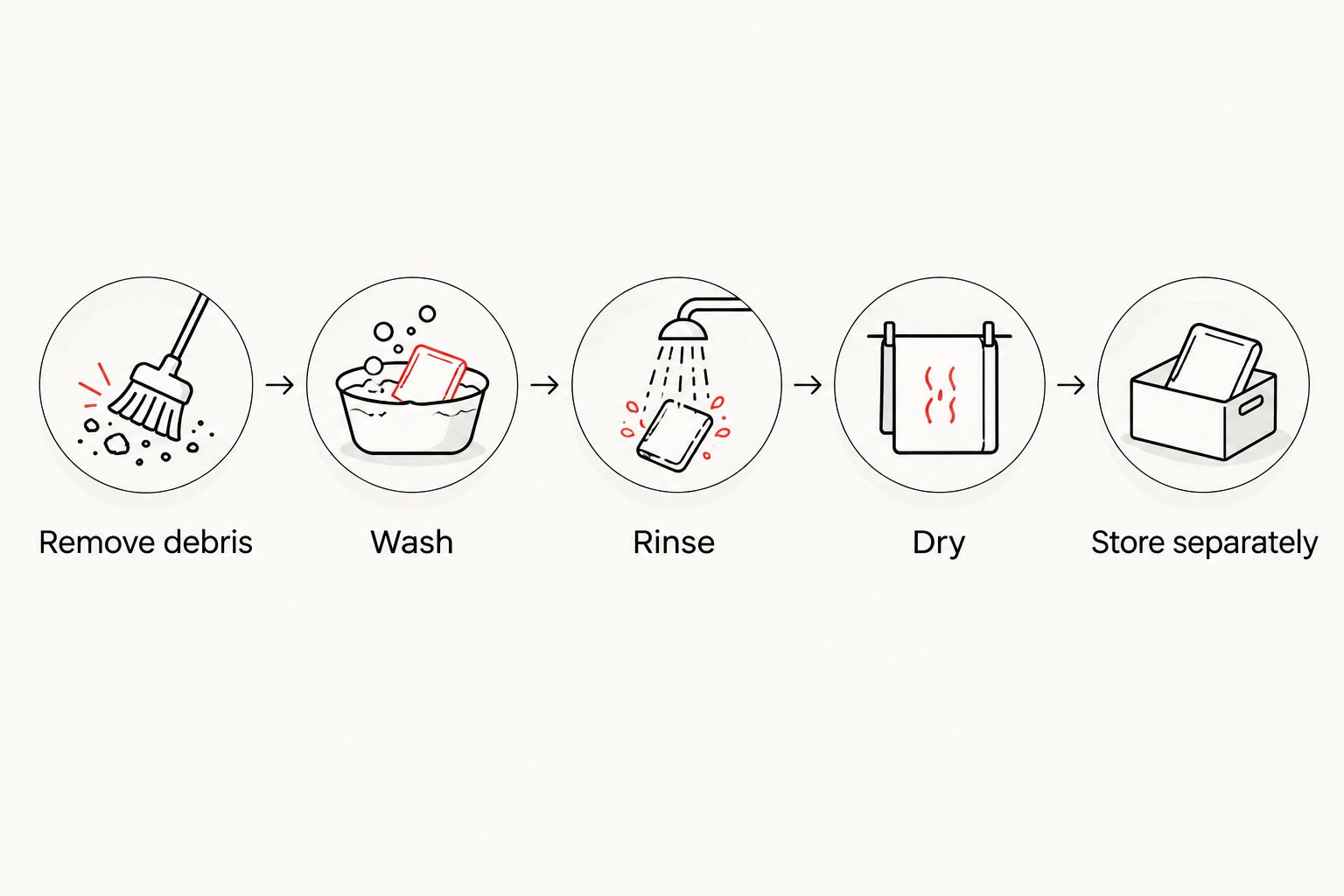
To clean a fly swatter after a backyard cookout, remove insect debris, wash the head and handle with mild soap and water if the care instructions permit, rinse, and let it dry completely. Cleaning removes dirt; disinfecting is a separate step that requires a surface-compatible product used exactly as its label directs. Keep the swatter and its cleaning supplies away from food, dishes, and food-contact tools throughout the job.
- How to clean a fly swatter: remove debris, wash as directed, rinse, dry, and store away from food-contact tools.
- The Skull Swatter from Dead Meat Society suits skull-themed cookouts; keep it separate from grilling accessories that touch food.
- Clean before disinfecting, and follow both the swatter's care instructions and the disinfectant label.
- Never assume a fly swatter is dishwasher-safe, boil-safe, or compatible with bleach.
Why this matters
A swatter has a dirty job. That does not earn it a parking space beside the serving platter.
The cleanup goal is straightforward: remove insect remains without spreading them around your BBQ station. For your 2026 cookout routine, give the swatter a separate cleaning path and storage spot instead of tossing it into the same pile as everything that touched dinner.
Dead Meat Society's Skull Swatter fits the skull-themed backyard setup. The Skull Swatter from Dead Meat Society is best for grillers who want skull-themed gear for the cookout—not another food-contact tool. Its role comes with a limit: keep it out of prep, serving, and utensil-staging areas.
How do you clean a fly swatter after a backyard cookout?
For a washable manual fly swatter, work in this order: remove debris, wash, rinse, dry, and store separately. Follow the item's care instructions wherever they set a different limit. This process does not apply to electric swatters, which require their own manufacturer-directed cleaning procedure.
1. Clear the cleanup area
Put away food, cover leftovers, and move clean dishes before handling the dirty swatter. Choose a utility-cleaning area away from food preparation, with access to water if the swatter permits washing.
Do not lay the head on a cutting board, serving tray, or the shelf where you rest cooking utensils. Set aside a cleaning brush or cloth used for utility jobs, not the one you use on dishes.
2. Remove loose insect debris
Hold the swatter over a lined trash container and gently remove loose remains with disposable paper. Avoid snapping or shaking the head across the patio; the point is to collect the debris, not relocate it.
Check both faces, the edges, and any openings in the head. Dispose of the paper before reaching for soap, taps, or clean storage supplies.
3. Wash the head and handle as permitted
If the care instructions allow soap-and-water cleaning, use mild soap and water to loosen remaining dirt. Gently work around openings and the connection between the head and handle without forcing or bending the material.
Clean the grip, too. A spotless head does not finish the job when your hands have been moving between the handle, trash, and cleanup supplies.
4. Rinse away loosened dirt and soap
Rinse using a method allowed by the care instructions. Direct the water away from clean dishes, food-contact tools, and nearby prep surfaces.
Inspect the head after rinsing. If visible debris remains in an opening or along an edge, repeat the cleaning step rather than calling a quick splash good enough.
5. Disinfect only when the directions support it
If you choose to disinfect, clean first, then use a disinfectant labeled for the relevant surface and application. Follow its directions for preparation, application, contact time, ventilation, and any required rinsing.
The label determines how long the surface must remain wet. There is no universal soak time, dilution, or spray-and-wipe shortcut that applies to every swatter and every disinfectant.
6. Dry, inspect, and put it away
Allow the swatter to dry completely in a place away from food and clean utensils. Inspect it for cracks, sharp edges, loose connections, or trapped debris before returning it to storage.
Clean the area and any reusable utility-cleaning supplies afterward. Finish by washing your hands with soap and water for at least 20 seconds, following CDC handwashing guidance.
Do you need to disinfect a fly swatter after every use?
Cleaning and disinfecting are different jobs. Cleaning removes dirt and debris; disinfecting uses an appropriate chemical product to kill germs according to its label. A clean appearance alone does not establish that an item has been disinfected.
For your 2026 cleanup checklist, make the distinction explicit. First remove the mess, then decide whether a compatible, label-directed disinfection step is appropriate.
| Step | What it does | Main limit |
|---|---|---|
| Cleaning | Removes dirt, insect remains, and other debris | Does not establish that the surface has been disinfected |
| Disinfecting | Kills germs covered by the disinfectant's label when used as directed | Requires a compatible surface and the full label-directed process |
Do not spray disinfectant over stuck-on insect remains and skip washing. Do not mix cleaning chemicals, either; CDC guidance warns against mixing household bleach or disinfectants with other cleaners.
Keep chemical products away from food and follow their handling instructions. More chemical is not a substitute for doing the steps correctly.
Why does the cleaning method vary?
The dirt is only part of the decision. The swatter's construction and care directions determine what treatment it can take.
- Material: Follow the care instructions for the actual material rather than assuming every manual swatter tolerates the same cleaner.
- Construction: Openings, seams, and head-to-handle connections need attention because visible debris can lodge there.
- Surface condition: Cracks, rough edges, or a loose head change whether the item remains practical to clean and use.
- Type of residue: Loose insect remains need removal; greasy or sticky residue needs cleaning rather than a dry wipe alone.
- Cleaner directions: Surface compatibility, dilution, contact time, and rinsing requirements come from the product label.
A swatter that looks sturdy has not automatically been approved for boiling water, prolonged soaking, or machine washing. Use care directions, not backyard chemistry.
Where should you clean and dry a fly swatter?
Choose a place where splashes and debris will not reach food, dishes, or cooking utensils. A utility-cleaning area keeps the job separate from meal preparation.
If you must use a household sink, remove dishes and food-contact items first. Afterward, clean the sink and surrounding surfaces, then follow appropriate surface-disinfection directions where needed. Do not leave the swatter soaking alongside dinner plates.
Dry it in a designated utility spot, not on the dish rack or across a serving tray. For the next 2026 backyard gathering, decide that spot before guests arrive; cleanup is easier when nothing needs an improvised home.
How should you store a clean fly swatter?
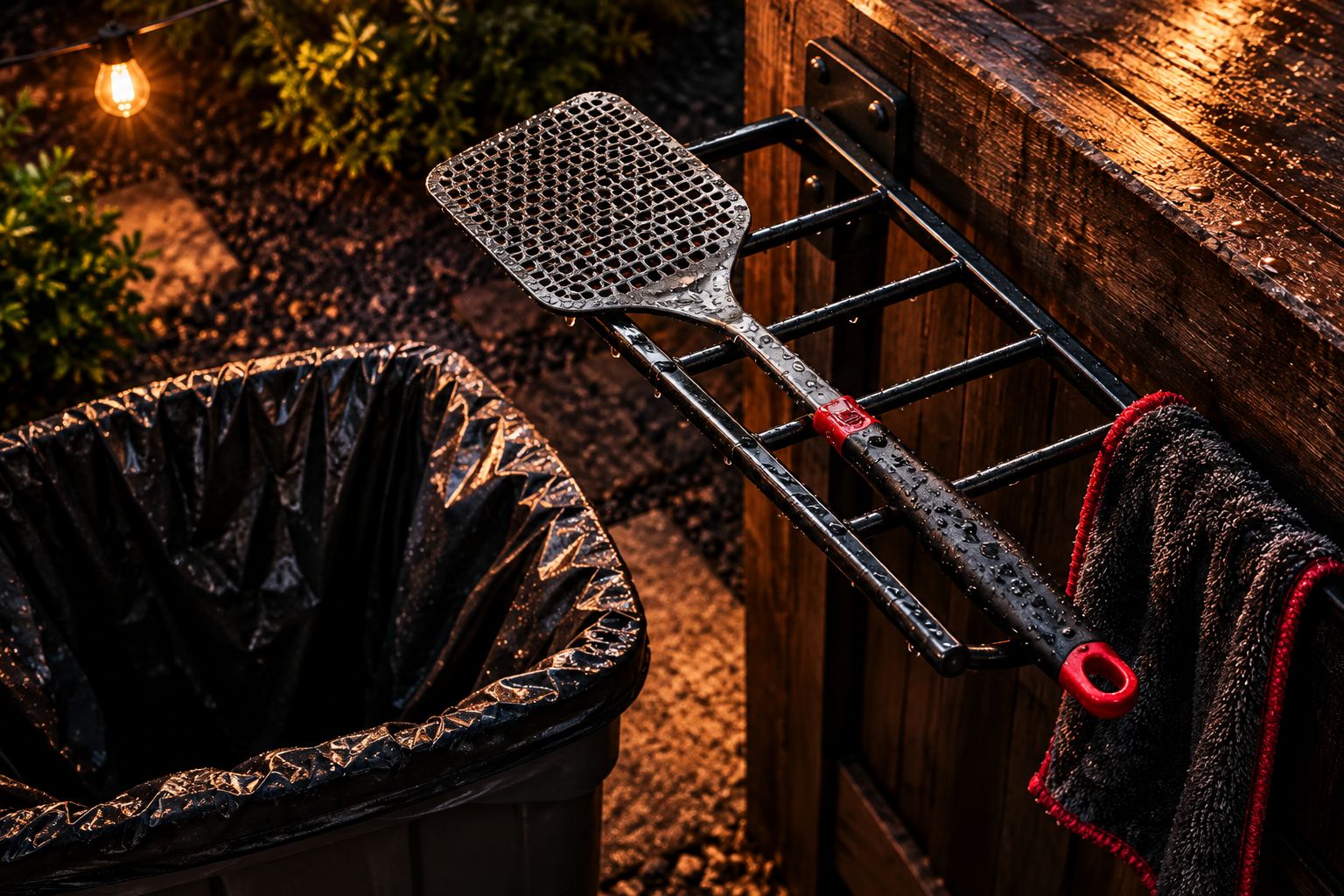
Store a clean, fully dry fly swatter in a designated utility location away from food-contact gear. A separate hook or compartment gives it an obvious home without sharing space with cooking utensils.
Keep the head from resting against serving surfaces. Avoid putting a damp swatter into closed storage, and check its condition before the next use rather than discovering a damaged head halfway through the cookout.
Dead Meat Society grilling accessories belong in a setup with clear boundaries. The swatter handles insects; the food-contact tools handle dinner. Same backyard, different storage.
A useful 2026 station check is simple: can someone helping with cleanup tell where the swatter goes without asking? If not, move it to a more distinct location.
What if the swatter touches a plate or prep surface?
Remove the swatter and take the affected item or surface out of use until it has been properly cleaned. Do not wipe the spot with a serving napkin and carry on.
Wash affected dishes and utensils using their normal appropriate cleaning process. For a prep surface, follow the cleaning and sanitizing directions suitable for that food-contact surface; disinfectant instructions are not automatically food-contact instructions.
If insect remains or the dirty swatter directly contaminate food, discard the affected food. Cleaning the swatter afterward does not undo contamination that has already happened.
When should you stop cleaning and replace a damaged swatter?
Stop using a swatter with sharp broken edges or a loose head. Cleaning does not repair damage, and forcing debris from a cracked opening does not restore the original surface.
Inspect the handle connection and the head while the item is clean and dry. If you cannot remove visible residue using permitted cleaning methods, do not put it back into service as though the job is finished.
There is no useful replacement calendar to invent here. For your 2026 cookout gear check, judge condition and cleanability rather than age alone.
FAQ
What's the easiest way to clean a fly swatter after a BBQ?
Remove loose insect remains, wash with mild soap and water if the care instructions permit, rinse, and dry completely. Keep the swatter and its cleaning supplies separate from food-contact tools.
Can I put a fly swatter in the dishwasher?
Do not put a fly swatter in the dishwasher unless its manufacturer explicitly permits it. Appearance alone does not establish that the head, handle, or connections tolerate a dishwasher cycle.
Can I use bleach to clean a fly swatter?
Use bleach only if the swatter's care instructions and the bleach product's label support that surface and application. Never mix bleach with other cleaners, and do not invent a dilution or soak time.
Does soap and water disinfect a fly swatter?
Soap-and-water cleaning is not the same as disinfecting. If disinfection is appropriate, clean first and then follow a compatible disinfectant's label, including its required contact time.
Should I clean the handle as well as the swatter head?
Yes, clean the handle as well as the head using the item's permitted care method. Pay attention to the grip and the connection where the handle meets the head.
Can I keep a clean fly swatter beside my grilling utensils?
Store the fly swatter separately from grilling utensils and other food-contact items. A designated utility hook or compartment helps prevent the head from touching clean gear.
How long should I wash my hands after cleaning a fly swatter?
Wash your hands with soap and water for at least 20 seconds, following CDC handwashing guidance. Do this after handling the swatter, insect debris, and cleanup supplies.
How do I clean the Skull Swatter from Dead Meat Society?
Follow the Skull Swatter's current care instructions rather than assuming dishwasher, soaking, or chemical compatibility. Keep it separate from food-contact surfaces during cleaning, drying, and storage.
One last thing
The final step is not making the swatter look clean. It is giving it somewhere to go that is not beside the burgers.
Pick the storage spot before you light the grill. That small decision keeps a dirty-job tool out of the food-prep shuffle and gives whoever cleans up a clear finish line. Feed everyone. Keep the swatter out of dinner.

