
Best cutting boards for meat prep in 2026


Best overall for raw meat: a dedicated plastic cutting board. Best for carving cooked meat: a hardwood carving board. Best for a nonporous steel surface: Dead Board. This 2026 guide from Dead Meat Society matches the board to the job—and keeps your knife out of a bad relationship.
- The best cutting board for meat prep is dedicated plastic; choose hardwood for carving cooked barbecue.
- Dead Meat Society’s Dead Board suits grillers who want a nonporous stainless steel cutting surface.
- Steel trades knife-edge friendliness for a nonporous surface. That trade matters if you use a favorite carving knife.
- Keep raw meat and ready-to-eat food separate. A double-sided board does not replace washing and sanitizing.
Why this matters
Your cutting board touches dinner before everybody else does. Choose it for cleaning, knife contact, and the meat you actually cook—not because it looks tough beside the smoker.
What makes the best cutting board for meat
- Cleanability: A surface you can wash thoroughly and sanitize correctly.
- Knife contact: A cutting surface that suits your knife and sharpening routine.
- Stability: A board that stays put while you trim or slice.
- Working room: Space for the meat and your knife stroke.
- Maintenance: Care requirements you will actually follow.
Meat cutting boards at a glance
| Option | Best for | Standout feature | Key limitation |
|---|---|---|---|
| Dedicated plastic cutting board | Everyday raw-meat preparation | Washable, nonporous surface | Deep knife grooves make cleaning harder |
| Hardwood carving board | Slicing cooked roasts and barbecue | Knife-friendly cutting surface | Requires hand washing and drying |
| Dead Board | Grillers choosing a steel prep surface | Double-sided 304 stainless steel | Hard steel is less forgiving on knife edges |
Dead Meat Society’s Dead Board is best for grillers who prioritize a nonporous stainless steel cutting surface over knife-edge friendliness. It belongs on this list, but it does not win every job. Neither does wood. Neither does plastic.
The right 2026 setup starts with a task, not a material loyalty oath.
1. Dedicated plastic board: best cutting board for raw meat prep
A dedicated plastic cutting board is the default for trimming chicken, portioning steaks, and preparing ground-meat mixtures. Choose a food-contact board with a smooth, intact surface and care instructions that fit your kitchen.
The big advantage is practical: you can assign it to raw meat and keep it out of your salad-and-sandwich workflow. That separation is easier to remember than whether you already cleaned the board under a pile of burger buns.
Plastic cutting board pros
- A nonporous surface supports straightforward washing and sanitizing.
- A dedicated raw-meat board makes cross-contamination rules easier to follow.
- Plastic is more forgiving on knife edges than a steel cutting surface.
- A dishwasher-compatible model fits a dishwasher-based cleanup routine.
Plastic cutting board cons
- Knife cuts accumulate, and deep grooves become difficult to clean.
- Dishwasher compatibility depends on the specific board; do not assume it.
- A light or warped board needs attention to stability before cutting.
Best for: The griller who regularly handles raw poultry, steaks, or burger ingredients and wants a clear separation between raw prep and serving.
Before choosing plastic in 2026, check whether the whole board fits in your sink. Then check the dishwasher instructions. A board that technically tolerates the dishwasher but blocks the spray arm is not doing you a favor.
Inspect both faces after washing. Replace a board with deep, hard-to-clean grooves rather than trying to scrub damage back into a smooth surface. USDA food-safety guidance recommends discarding cutting boards once they become excessively worn or develop hard-to-clean grooves.
A dedicated board still needs cleaning between tasks. Raw chicken followed by steak is not a permission slip to leave poultry residue behind.
Verdict: Buy a dedicated plastic board as your everyday raw-meat workhorse.
2. Hardwood carving board: best cutting board for cooked barbecue
A hardwood carving board makes sense when the meat is cooked and your main job is slicing. Think rested steak, roast pork, or brisket—not a raw-chicken landing zone that becomes the serving platter without a wash.
Choose a sound board made for food preparation. A juice groove is useful when carving releases liquid, but the groove is another surface you must scrub.
Hardwood carving board pros
- Wood is more forgiving on knife edges than steel.
- A board with adequate working space supports long, controlled carving strokes.
- A juice groove helps contain liquid released during slicing.
- A dedicated cooked-meat board keeps serving separate from raw prep.
Hardwood carving board cons
- Wood needs hand washing, prompt drying, and care appropriate to its finish.
- Soaking and dishwasher exposure can damage wooden boards.
- Cracks, splits, and hard-to-clean grooves are reasons to retire a board.
Best for: The cook who finishes barbecue at the board and wants a cutting surface suited to a carving knife.
End grain and edge grain describe how wood is arranged, not whether a board is automatically safe or well made. Construction, surface condition, stability, and care still matter. Do not pay attention to grain orientation while ignoring a split beside the handle.
For a 2026 carving setup, match the board to your usual cooked cut. Set the meat down and picture the knife traveling through it. If the blade or slices continually run off the edge, you need more working room.
Wood is not automatically forbidden for raw meat. USDA guidance permits wood or nonporous cutting boards; separation and proper cleaning are the important rules. This guide gives hardwood the cooked-meat slot because that makes the backyard workflow clear, not because wood has magical food-safety powers.
Verdict: Buy a hardwood carving board for cooked meat and knife-friendly slicing.
3. Dead Board: best cutting board for a stainless steel surface
Dead Board is a double-sided cutting surface made from 304 stainless steel and built for grillers. That is the confirmed specification. Its appeal is a nonporous metal surface, not a promise that bacteria disappear when they see a skull.
For Dead Meat Society cutting board shoppers, the real decision is whether stainless steel fits the way you cut. Steel is hard. Your knife edge notices.
Dead Board pros
- Stainless steel provides a nonporous cutting surface.
- The double-sided construction gives you access to both faces.
- It avoids the oiling routine associated with unfinished wooden boards.
- The stated material is 304 stainless steel, rather than an unspecified metal.
Dead Board cons
- Steel is less forgiving on knife edges than wood or plastic.
- Double-sided construction does not separate raw and cooked food by itself.
- Stainless steel still requires washing and appropriate sanitizing after raw-meat contact.
Best for: Grillers who specifically want a steel surface and accept the knife-contact trade-off.
Dead Board belongs in a deliberate setup. If your main activity is long brisket carving sessions with a knife you baby, hardwood is the better match. If you want a nonporous steel surface and understand what that means for your blade, Dead Board is the relevant option here.
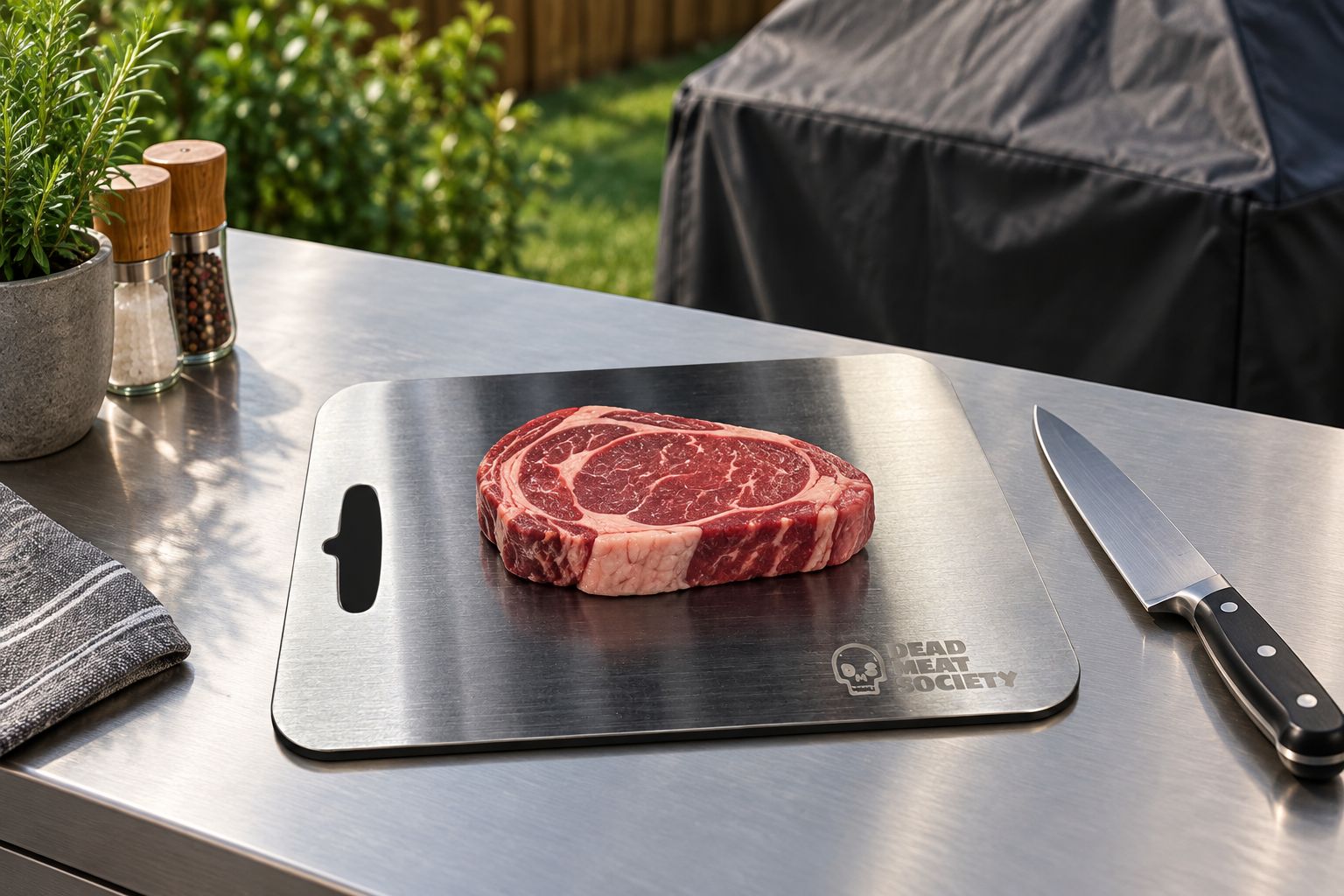
Check the current product care instructions before choosing a cleaning method. Stainless steel construction alone does not establish a product-specific dishwasher recommendation.
Also, resist the flip-and-forget move. The underside can contact the counter, your hands, or raw juices during prep. Turning the board over is not sanitizing it.
Verdict: Buy Dead Board for the steel-surface use case; skip steel if preserving your knife edge is the priority.
How the boards rank
This 2026 ranking compares board types by cleanability, knife contact, stability, working room, and maintenance. It is a task-based buying guide, not a laboratory performance test or a scored comparison of unprovided product specifications.
Plastic takes the raw-prep slot because a dedicated, washable board makes that workflow straightforward. Hardwood takes carving because it gives your knife a more forgiving surface. Dead Board takes stainless steel because its stated construction directly fits that requirement.
Size and stability remain purchase checks, not assumed advantages. The available Dead Board description does not establish dimensions or a nonslip feature, so neither determines its position here.
Build a raw-to-cooked workflow that stays clean
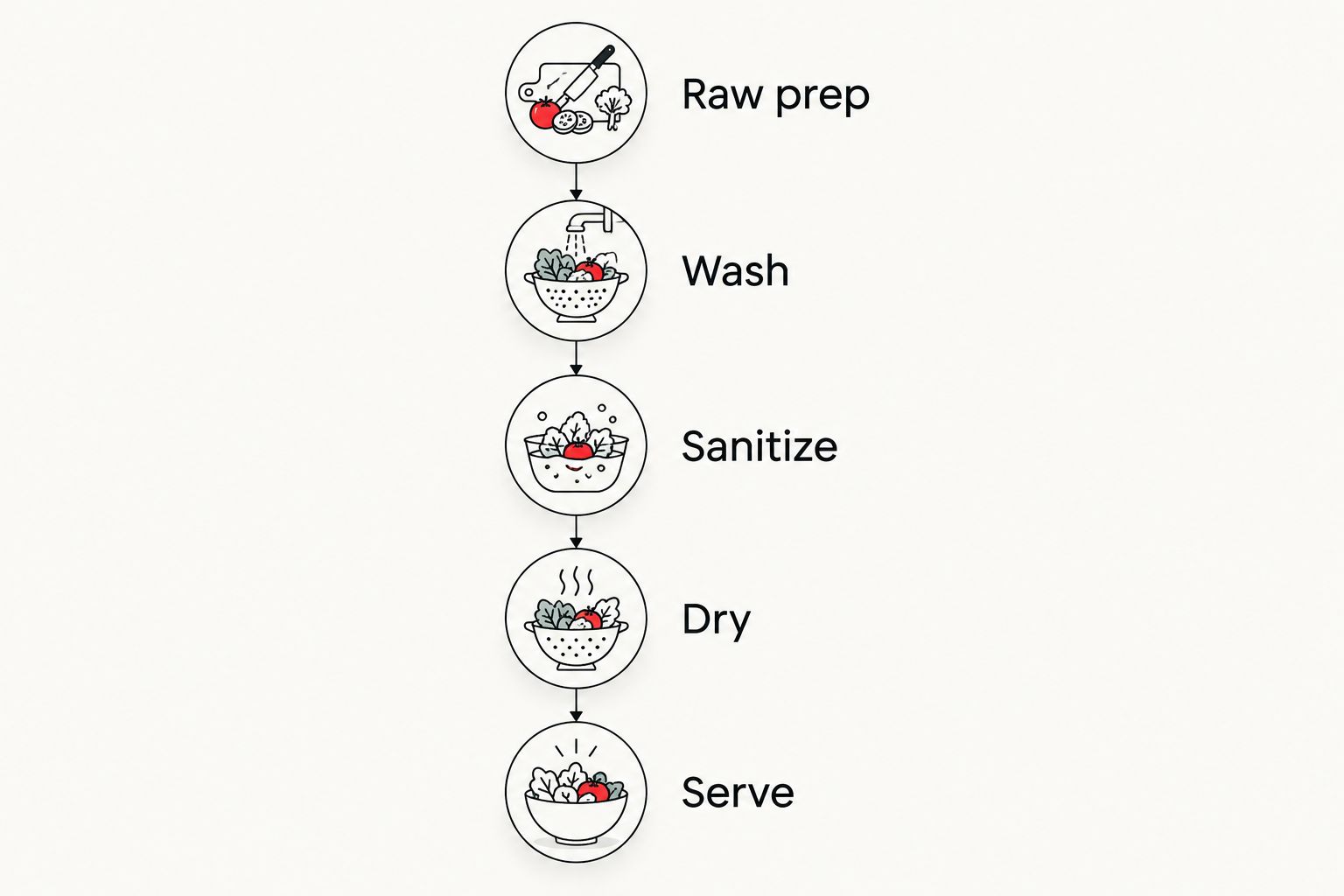
The best cutting board for meat cannot rescue a sloppy handoff. Give raw prep and finished food different destinations before you light the grill.
Raw prep
Put the raw-meat board in a defined prep area. Keep bread, garnishes, and serving plates elsewhere. If you need something from a drawer after touching raw meat, wash your hands before grabbing the handle.
Wash
Wash the board with hot, soapy water after use. Clean both faces, edges, handles, and any groove. USDA guidance also calls for washing utensils and countertops after preparing each food item.
Wash your hands with soap and water for 20 seconds. That is CDC guidance—not a dramatic countdown invented for barbecue.
Sanitize
After washing, use a sanitizing method appropriate to the board and follow the sanitizer’s food-contact directions. Observe its required contact time and any rinsing instructions. Guessing a stronger mixture is not a cleaning strategy.
Dry
Let the board dry thoroughly before storage. Keep wooden boards out of standing water, and do not trap a damp board beneath a stack of other gear.
Serve
Move cooked meat to a clean board with clean utensils. A fork or pair of tongs that handled raw meat needs washing before it handles food ready to eat.
USDA guidance limits perishable food at room temperature to 2 hours, or 1 hour when temperatures exceed 90°F. That applies to meat waiting on a cutting board, too. A board is a work surface, not refrigeration with better branding.
For a backyard cookout, take out the meat you are about to prepare rather than leaving the entire batch beside the grill. Feed the crowd. Do not turn the prep table into an unattended holding station.
Which cutting board should you choose?
Start with dedicated plastic for raw prep. Add hardwood if you regularly carve cooked barbecue. Choose Dead Board when stainless steel is the feature you actually want.
If you already own a serviceable board, inspect it before replacing it. Look for deep grooves, cracks, warping, or a surface you cannot clean thoroughly. A new material is not an upgrade if it creates a care routine you will ignore.
For Dead Meat Society cutting board buyers in 2026, the useful question is not whether steel looks more serious. It is whether the steel surface suits your knife, cleanup habits, and usual meals.
Keep the decision simple:
- Mostly raw poultry and burger prep: Choose dedicated plastic.
- Mostly slicing finished roasts and barbecue: Choose hardwood.
- Specifically want a nonporous metal surface: Choose Dead Board.
Buy for the task. The meat does not care which material won an argument online.
FAQ
What's the best cutting board for meat in 2026?
A dedicated plastic cutting board is the best default for everyday raw-meat preparation. Choose hardwood for carving cooked barbecue, or Dead Board if you specifically want a stainless steel cutting surface.
Is a wood cutting board safe for raw meat?
Yes, a sound wooden cutting board can be used for raw meat when it is properly cleaned and sanitized. USDA guidance allows wood or nonporous boards and recommends keeping raw meat separate from ready-to-eat foods.
Is stainless steel better than plastic for cutting meat?
Stainless steel is not better for every meat-preparation task. Both provide nonporous surfaces, but steel is less forgiving on knife edges; dedicated plastic is the default recommendation for raw prep in this guide.
What is Dead Board made from?
Dead Board is a double-sided cutting surface made from 304 stainless steel. Its steel construction suits grillers choosing a nonporous metal surface, with a knife-edge trade-off compared with wood or plastic.
Can I flip a cutting board over after preparing raw chicken?
Flipping a cutting board does not replace washing and sanitizing after raw-chicken preparation. Hands, counter contact, and raw juices can contaminate more than the face you cut on.
Can a wooden meat cutting board go in the dishwasher?
Keep wooden meat cutting boards out of the dishwasher. Hand wash and dry them promptly, then follow the maker's instructions for care appropriate to the wood and finish.
When should I replace my meat cutting board?
Replace a cutting board when it becomes excessively worn or develops grooves that are difficult to clean. Cracks and damaged surfaces also undermine a dependable cleaning routine.
One last thing
Your serving utensils deserve the same scrutiny as your board. You can wash the cutting surface perfectly and then put raw-meat residue straight back onto dinner with the tongs.
Before the next cookout, set a clean serving plate and clean utensils aside before raw prep begins. That small bit of organization does more for the meal than buying a board and expecting it to police the whole station.

