
How to stop meat sticking to your smash burger press


To keep smash burgers from sticking to the press, place food-safe parchment paper between the cold beef and the press, smash early on a properly heated flat cooking surface, then release the press before peeling away the paper. Keep parchment away from flames and within its manufacturer’s temperature limits; it belongs above the beef during pressing, not underneath the burger while it cooks.
- How to keep smash burgers from sticking to press: use parchment above cold beef, then remove it after pressing.
- Keep the press face clean; attached meat scraps give the next burger another place to stick.
- Dead Meat Society’s Dead Smash - Burger Press is a heavyweight cast iron option, not a substitute for release technique.
- Cook ground beef to 160°F internally; crust color does not establish food safety.
Why this matters
A burger stuck to the press gets pulled away from the cooking surface just when you want it making contact. You end up repairing a torn patty instead of building a crust. Dinner should not require reconstructive surgery.
Separate pressing from cooking: flatten the beef, release the press, and leave the burger alone. If you are compensating by leaning harder, read about how much pressure you need to smash a burger properly. More force does not fix a sticky contact surface.
For your 2026 cookout routine, make the release method part of your setup before the first ball of beef hits the heat. Hunting for paper while dinner sizzles is a lousy station layout.
How do you stop meat sticking to your smash burger press?
Use a temporary parchment barrier above the beef and remove it immediately after pressing. The barrier prevents direct contact between the raw meat and the press face, while the underside of the burger stays directly against the cooking surface.
Follow this sequence:
- Prepare the station. Have food-safe parchment ready, check its heat-use instructions, and clear a place for the press away from cooked food.
- Keep beef cold. Portion it gently and refrigerate it until you are ready to cook. Do not knead it into a dense, sticky ball.
- Heat the surface. Use a flat cooking surface suitable for your equipment, prepared according to its instructions. Do not attempt this through open grill grates.
- Cover and press. Put the beef on the surface, place parchment over it, and press straight down while the meat is still raw and pliable.
- Release and peel. Lift the press without dragging it sideways, then peel the parchment back from an edge. Remove the paper from the cooking area.
- Leave it alone. Let the burger cook rather than repeatedly pressing it. Use a suitable turning tool when the crust is ready to release.
The important distinction is placement. Paper above the meat is a temporary release barrier; paper below the meat interrupts the direct cooking contact you are trying to create.
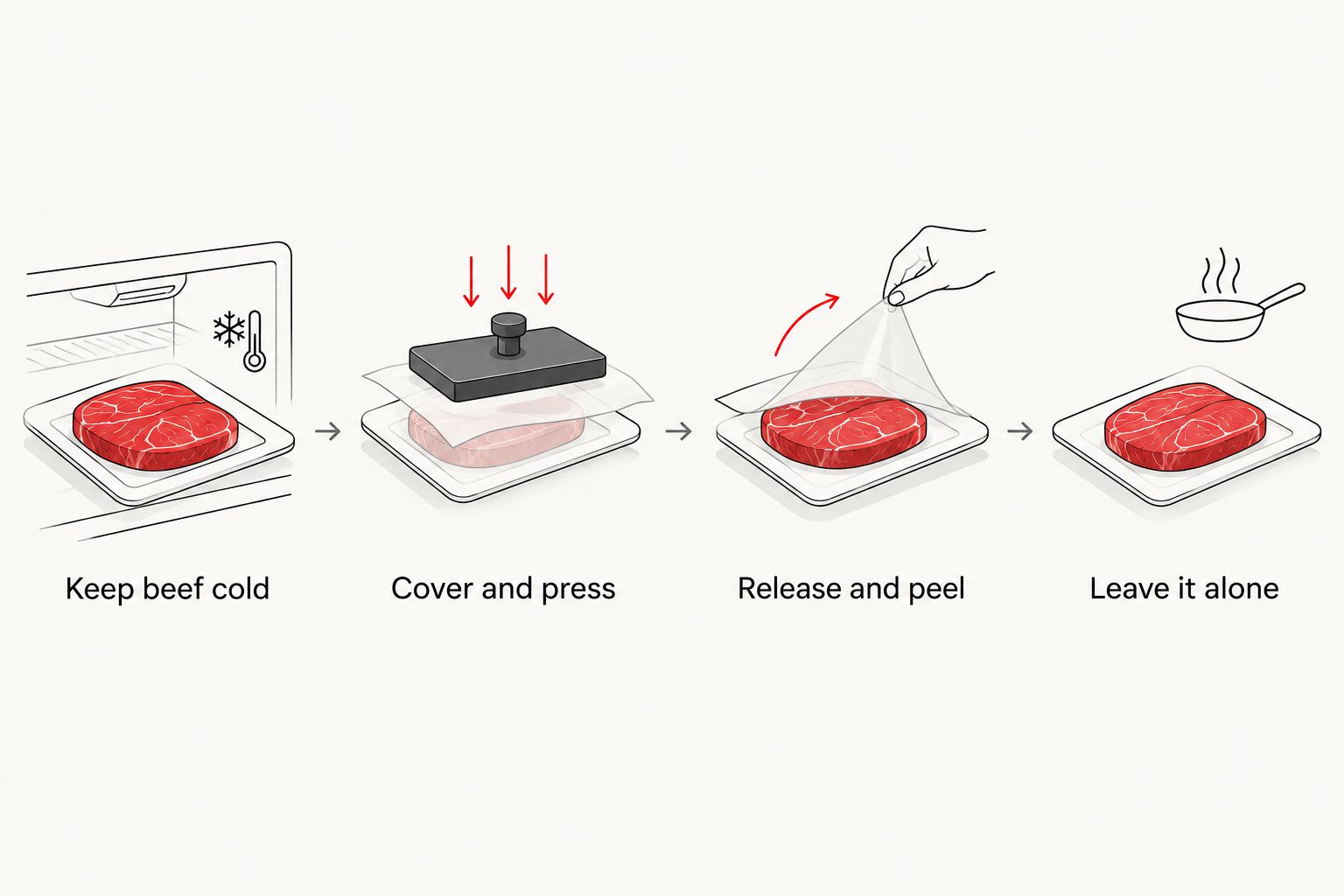
Start with a manageable batch. Crowding the surface makes it harder to position the paper, press vertically, and remove everything without reaching across neighboring burgers.
Parchment versus oil: which release method should you use?
Parchment is the best starting point when raw meat keeps clinging to the press. Oil reduces friction, but it does not create the same physical separation between the meat and the metal.
These are release methods, not reasons to buy a different press:
| Release method | Best for | Advantage | Limitation |
|---|---|---|---|
| Temporary parchment barrier | A repeatable starting technique | Separates the raw beef from the press face | Requires careful handling around heat and prompt removal |
| Lightly oiled press face | Cooks comfortable with direct-contact pressing | Avoids handling paper during the press | Does not prevent every sticking problem; excess oil adds mess |
If you use oil, apply only a light film to a clean press face before working over the cooking area. Do not pour oil onto an already sticky layer of meat and expect the problem to disappear.
Parchment is not permission to ignore heat limits. Follow the paper manufacturer’s directions, keep loose edges away from burners and flames, and never leave the sheet unattended on the cooking surface. Do not substitute wax paper.
For a repeatable 2026 burger routine, choose a release method and keep the other variables steady. Changing the beef handling, surface heat, pressure, and release method together tells you very little about what fixed the problem.
Why smash burgers stick to the press
Raw ground beef makes broad, close contact with the press when you flatten it. The release becomes harder when the meat is tacky, the press carries residue, or your lifting motion pulls the patty upward.
Check these factors before blaming the tool:
- Direct meat contact. Without a barrier, raw beef touches the press face across the flattened patty. Parchment removes that contact during pressing.
- Overworked beef. Kneading and compressing ground beef changes its texture and encourages a tacky mixture. Handle portions gently rather than packing them tight.
- Meat residue. Scraps left on the press create an uneven contact surface and carry raw-meat contamination into the next task.
- Dragging during release. Pulling the press sideways stretches the burger before it has a cooked structure. Lift deliberately instead of scraping across the patty.
- Repeated pressing. Returning the press to a partly cooked burger creates another release problem and squeezes out juices. Make the initial smash count.
Heat matters, but distinguish the surfaces. The cooking surface needs proper preheating for browning; that does not mean you should leave a handheld press over a burner or assume its handle is safe to grab.
What should you do if the burger lifts with the press?
Stop pulling upward when the patty starts lifting. Lower it gently back onto the cooking surface instead of stretching it until it tears.
If parchment is between the beef and press, separate the press from the paper first. Then peel the paper back low over the patty, rather than yanking it straight up. Keep your hands clear of the hot surface and splattering fat.
If you pressed without parchment, use a suitable food-contact utensil to ease the meat away from the press while keeping the patty supported. Do not use your fingers or force a sharp blade toward your hand.
A torn burger is not a reason to mash everything repeatedly. Settle the meat back down, cook it safely, and correct the setup for the next portion. Nobody at the table needs a briefing about the casualty.
Does the Dead Smash - Burger Press solve sticking by itself?
Dead Meat Society’s Dead Smash - Burger Press is best for grillers who want a heavyweight cast iron tool for flattening burgers. Its material and weight are stated in the product description; neither establishes a nonstick guarantee.
The Dead Smash - Burger Press fits the pressing step described here. Use a clean contact face, handle the beef gently, and establish a controlled release rather than expecting weight to solve adhesion.
The benefit is straightforward: a dedicated tool gives you a broad pressing surface. The trade-off is equally straightforward: cast iron needs appropriate care, and heavyweight does not mean effortless release.
Dead Meat Society’s grilling accessories belong in a working station, not a magic-act explanation. Check the product’s current care instructions before choosing cleaning products or applying a seasoning routine. Do not assume it is dishwasher-safe or has a particular coating.
Should you press the burger again after flipping?
No—do not repeatedly smash a burger after its initial press. Flatten it while the meat is raw and pliable, then let cooking build its structure.
Pressing again is not a repair for a failed first release. It pushes liquid from the burger and disturbs contact with the cooking surface. If the patty is uneven, adjust how you portion and press the next one.
There is also a difference between releasing the press and releasing the burger for flipping. The first happens immediately after flattening; the second happens after the underside has cooked. Treating those as the same problem leads to unnecessary scraping and torn crust.
How do you keep the press clean between burgers?
Keep visible meat buildup from becoming the next patty’s problem. If the face needs cleaning, pause and follow the press manufacturer’s directions rather than trying to service it over active heat.
A quick wipe removes debris; it does not establish that a raw-meat-contact tool is sanitary. Keep the press and its resting area separate from cooked burgers, serving surfaces, and ready-to-eat toppings.
Make this part of your 2026 cleanup routine:
- Keep the press in the raw-meat work area during cooking.
- Remove used parchment from the station; do not reuse it for serving.
- Wash your hands after handling raw beef or contaminated paper.
- Clean the press after cooking according to its material and manufacturer’s directions.
- Clean and sanitize suitable food-contact work surfaces after raw-meat preparation.
Do not introduce a cloth near the hot cooking surface to wipe the press mid-smash. Stop, move to a safe work area, and handle cleaning separately from cooking.
What food-safety checks still matter when the burger releases cleanly?
A clean release says nothing about whether the beef is safely cooked. A dark crust is evidence of browning, not an internal-temperature reading.
For your 2026 cookout checklist, use the USDA’s ground-beef endpoint: 160°F, equivalent to approximately 71°C, measured internally with a food thermometer. For a thin patty, insert the probe from the side so its sensing area reaches the center, following the thermometer’s instructions.
Keep raw ground beef refrigerated at 40°F or below, consistent with USDA cold-storage guidance. Bring out what you need rather than leaving the whole batch beside the grill while you cook.
Finally, separate raw and cooked handling. A press that touched raw beef should not become a tool for pushing down finished burgers or holding buns in place. Good crust deserves better company than raw-meat residue.
FAQ
What’s the easiest way to keep smash burgers from sticking to the press?
Place food-safe parchment between the beef and the press, then remove it immediately after pressing. Keep the paper within its manufacturer’s heat limits and away from flames.
Should I put parchment under a smash burger?
No—place parchment above the beef during pressing, not beneath it during cooking. Remove it after the press lifts so the burger continues cooking directly against the flat surface.
Can I use wax paper instead of parchment for smash burgers?
Do not use wax paper for this hot-surface workflow. Use food-safe parchment only as its manufacturer permits, and keep it away from flames and exposed heat sources.
Do I need to oil my smash burger press?
You do not need oil on the press face when parchment separates it from the beef during pressing. If you choose direct-contact pressing, a light oil film does not replace a clean face and controlled release.
Will a heavier burger press stop the meat from sticking?
A heavier press does not guarantee release. Dead Meat Society’s Dead Smash - Burger Press is described as heavyweight cast iron, but meat handling, residue, and the release method still matter.
Why does my burger tear when I lift the press?
The burger tears when attached meat gets pulled away from the cooking surface. Lower the press, separate it carefully, and use a parchment barrier for the next patty.
What temperature should a smash burger reach?
A smash burger made from ground beef should reach 160°F internally under USDA guidance. Measure with a food thermometer; a browned exterior does not confirm the internal temperature.
One last thing
The sticking problem has two different moments: getting the press off raw beef and getting the cooked crust off the cooking surface. Fix the first with separation and controlled release; handle the second with proper cooking and flipping technique.
Add that distinction to your 2026 grilling plan before changing tools. Dead Meat Society burgers should bring people to the table, not keep the cook trapped in a wrestling match with dinner.

