
How to wash and store a cooling towel after grilling


Wash cooling towels according to their care label after grilling, then dry them completely before storing them in a clean, dry place. A quick rinse is not a substitute for washing away sweat, smoke residue, or food splashes. Keep your cooling towel separate from raw-meat cleanup and hot equipment; it is for comfort, not heat protection.
- How to wash cooling towels: follow the care label, wash after use, and dry completely before storage.
- Dead Meat Society cooling towels belong in your personal-comfort routine, not your hot-grate cleanup routine.
- Check washing, detergent, bleach, and drying instructions instead of borrowing settings from another towel.
- Never seal a damp cooling towel in a bag between cookouts.
Why this matters
The burgers are gone. The family is fed. Your damp towel is still balled up beside the grill.
That last part needs fixing. Trapped moisture encourages musty odors, and a towel worn against your skin should not share a storage space with greasy equipment. Cleaning and drying are separate jobs. Finish both.
For Dead Meat Society's Dead Cool Towel - White DMS, use the supplied care instructions to choose the washing and drying method. Best for: grilling enthusiasts who want a dedicated personal-comfort towel, separate from cleanup gear. The limitation is just as important: a cooling towel does not protect you from flames, hot metal, or heat illness.
How do you wash and store a cooling towel after grilling?
Read the label, wash as directed, rinse thoroughly, dry completely, and store clean. That is the sequence. Do not turn an unfamiliar fabric into a laundry experiment because dinner ran late.
1. Read the care instructions before choosing settings
Check the sewn-in label, packaging, or manufacturer instructions for the permitted washing method. Look for water-temperature guidance, detergent restrictions, bleach instructions, and drying directions.
Do not assume a cooling towel takes the same treatment as your bath towels. Its color does not tell you whether bleach is permitted, and its size does not tell you whether it belongs in the dryer. If the instructions are unclear, ask the manufacturer before choosing a treatment the label does not authorize.
2. Keep the used towel away from food preparation
Once you finish wearing the towel, put it somewhere separate from serving dishes and food-preparation surfaces. Do not drop it onto the cutting area while you clear the table.
If you notice loose debris, remove it before washing. Avoid rubbing grit deeper into the fabric, and do not use a dirty grill brush to knock anything off. You are cleaning something that touches your skin, not scraping yesterday's grate.
3. Wash using the permitted method
Use the washing method and detergent specified by the care instructions. Follow the detergent's dosing directions rather than adding an extra splash because the towel smells smoky.
If hand washing is permitted, use a clean basin and follow the manufacturer's directions. If machine washing is permitted, follow the stated cycle and load guidance. Neither method is automatically correct for every cooling towel.
Do not add fabric softener, bleach, fragrance treatments, or stain removers unless the care instructions allow them. A laundry additive being useful elsewhere does not make it suitable here.
4. Rinse until the cleaning product is removed
Follow the permitted washing process through its rinse stage. For hand washing, keep rinsing as needed to remove soap rather than stopping while the fabric still feels soapy.
Do not confuse a strong fragrance with a clean towel. If the towel still smells unpleasant after washing and drying, inspect it and revisit the approved care process. Covering an odor with perfume leaves the underlying problem unresolved.
5. Dry completely using the approved method
Follow the drying instructions. If air drying is permitted, spread the towel out where air can circulate rather than leaving it folded in a wet stack.
If tumble drying is permitted, use the specified setting. Do not improvise with the grill lid, warming rack, or nearby hot metal. A cooking station is not a drying rack, even when it looks conveniently warm.
6. Check dryness before putting it away
Check the folds, edges, and any overlapping areas before storage. If part of the towel still feels damp, leave it out to finish drying.
Then place it in a clean, dry storage area away from dirty BBQ equipment and cleaning chemicals. Fold it only once it is dry. The job ends at dry storage, not when you press the washing-machine button.
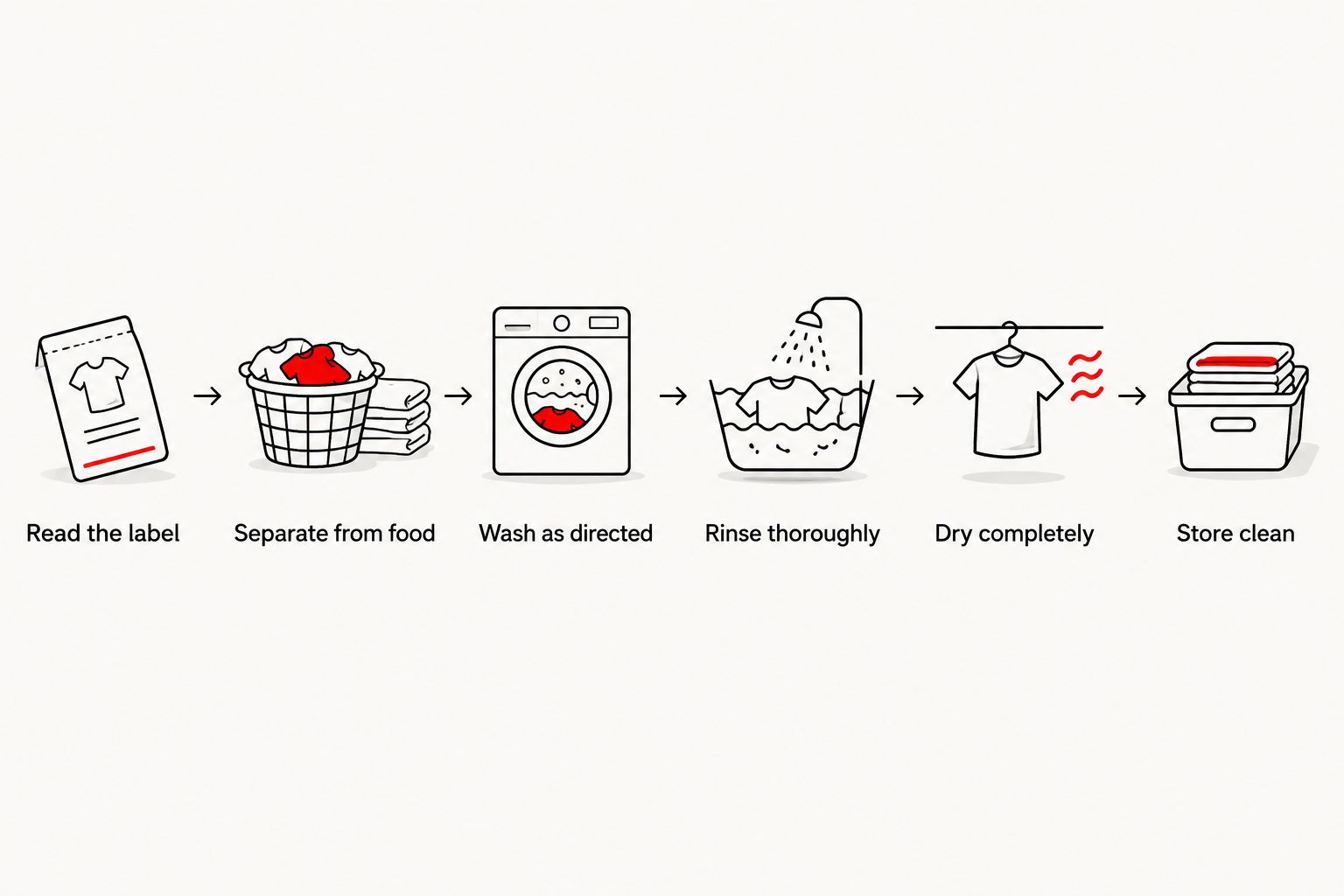
What should you check before washing a cooling towel?
Use the care label to settle laundry decisions, not a rule copied from an unrelated product. The table below is a decision aid, not a replacement for the manufacturer's instructions.
| Care decision | What to check | What not to assume |
|---|---|---|
| Washing method | Whether hand washing or machine washing is permitted | Every cooling towel is machine washable |
| Water temperature | The stated temperature or care symbol | Hotter water is always the right choice |
| Detergent | Any restrictions and the detergent's dosing directions | Extra detergent guarantees a better result |
| Laundry additives | Instructions for bleach, softener, and stain treatments | A white towel automatically permits bleach |
| Drying method | Air-drying or tumble-drying directions | Every towel tolerates dryer heat |
| Storage | Whether the towel is completely dry and the space is clean | A closed bag makes damp storage acceptable |
The advantage of a label-led routine is straightforward: you are following instructions intended for that towel. The inconvenience is that you must check before treating it like the rest of the laundry. That is a better trade than guessing.
Why cooling towel care varies
A towel worn around your neck during a cookout faces a different cleanup problem from one used briefly and kept away from food. These factors determine what deserves attention:
- The care instructions. The permitted washing method, additives, and drying method set the boundaries for your routine.
- What touched the towel. Sweat, food splashes, and contact with dirty equipment are different from clean water used during normal use.
- How it was left after grilling. A towel spread out after use is not in the same condition as one forgotten damp in a bag.
- Whether it dries fully. Overlapping folds and crowded drying space can leave damp sections behind.
- Where you store it. Clean indoor storage keeps the washed towel separate from greasy gear, spills, and outdoor dirt.
Do not respond to every problem by increasing water temperature or adding chemicals. Start by identifying what happened, then stay within the approved care directions.
How should you handle sweat, smoke, and food splashes?
Sweat from normal wear
Wash the towel after a grilling session rather than treating repeated wetting as cleaning. Water used to refresh a cooling towel during use does not replace its laundry routine.
Keep the towel for personal comfort throughout the cookout. Once it becomes the table wipe, apron substitute, and spill catcher, you have given it several jobs that do not belong around your neck.
Smoke odor that remains after washing
Check the towel after it has dried. If the smoke smell remains, repeat the manufacturer-approved cleaning process or ask the manufacturer about an appropriate treatment.
Do not invent a vinegar soak, bleach bath, or high-heat cycle. Those treatments need their own approval. A stubborn smell is annoying; it is not permission to ignore the label.
Grease or sauce splashes
Remove loose food without grinding it into the fabric, then consult the approved stain-care directions. Do not scrub aggressively or add a solvent simply because it works on the grill exterior.
For Dead Meat Society cooling towels, keep the same separation rule: personal comfort stays separate from equipment cleanup. That habit reduces the chance of turning a small splash into a towel covered in grease.
Contact with raw meat or its juices
Take the towel out of personal use immediately. Keep it away from ready-to-eat food, clean surfaces, and other people's towels while you arrange appropriate cleaning.
Do not give it a quick rinse and put it back around your neck. If you cannot establish a suitable cleaning method within the manufacturer's instructions, do not return it to personal use. Wash your hands after handling contaminated fabric.
Where should you store a cooling towel between cookouts?
Store a cooling towel completely dry, in a clean place separate from used grilling equipment. An indoor drawer or clean shelf is a sensible choice when the surrounding area is dry and free of chemical spills.
A storage container is useful only when both the towel and container are clean and dry. Check the bottom of a bag before packing; yesterday's spill does not become harmless because you cannot see it from the top.
Use this final check before closing the drawer or bag:
- The towel is clean and has no unresolved unpleasant odor.
- The folds and edges feel dry.
- The storage area is dry and visibly clean.
- Dirty equipment and food waste are stored elsewhere.
- Nothing damp is being packed against the towel.
Keep the towel somewhere you will remember it before the next cookout. Practical storage beats a perfect hiding place.
What if you have to pack up before the towel dries?
Sometimes cleanup ends at somebody else's house, a campsite, or the tailgate. You still have to get the damp towel home.
For transport, contain it separately from clean belongings and food. Temporary transport is not long-term storage. Unpack it when you arrive, then wash and dry it according to its instructions.
Do not leave the bag in the vehicle until the next grilling session. Put unpacking on the same cleanup list as bringing food inside and clearing used equipment. The forgotten damp bundle is the problem you are trying to prevent.
Can you use the cooling towel for grill cleanup too?
No. Keep your cooling towel dedicated to personal comfort rather than wiping greasy surfaces or handling hot equipment. It is not an oven mitt, a grate-cleaning tool, or protection from heat illness.
Dead Meat Society's flame-and-family approach does not require turning every piece of fabric into emergency equipment. Keep your towel out of the fire zone, take breaks from the heat, and do not rely on a cooling sensation as proof that conditions are safe.
FAQ
Can I put a cooling towel in the washing machine?
Machine wash a cooling towel only if its care instructions permit it. Follow the specified cycle, water-temperature guidance, and detergent restrictions rather than using settings from an unrelated towel.
What water temperature should I use to wash a cooling towel?
Use the water temperature stated in the cooling towel's care instructions. Do not assume a hot wash is suitable because the towel smells smoky or has a stain.
Can I use fabric softener or bleach on a cooling towel?
Use fabric softener or bleach only when the cooling towel's care instructions allow it. White fabric alone does not establish that bleach is permitted.
Can I put a cooling towel in the dryer?
Tumble dry a cooling towel only if the care instructions permit it, using the specified setting. Never dry it on a grill, warming rack, or other hot cooking surface.
Is rinsing a cooling towel enough after grilling?
Rinsing is not a substitute for washing a cooling towel after grilling. Follow its care instructions to clean it, then dry it completely before storage.
Why does my cooling towel smell after I put it away?
Damp storage can contribute to a musty smell, and incomplete cleaning can leave odors behind. Wash according to the care instructions, dry fully, and clean the storage area before putting the towel back.
Can I store my cooling towel wet in a sealed bag?
Do not store a cooling towel wet in a sealed bag between uses. If you must contain it for transport, unpack it promptly and complete the washing and drying routine.
Can I wear my cooling towel after wiping up raw meat juices?
Do not wear a cooling towel after using it to wipe up raw meat juices. Remove it from personal use and establish an appropriate cleaning method within the manufacturer's care instructions before using it again.
One last thing
Choose the drying spot before you light the grill. Clear a clean place where the washed towel can finish drying without being folded over dirty equipment or forgotten in a bag.
That small decision makes the last cleanup job easier when everybody is full and nobody wants another chore. Feed everyone. Finish the laundry.

