
How to use a cooling towel while grilling


To use a cooling towel while grilling, wet it with clean water, wring out the excess, and place it against your neck during a break away from the grill, following its label instructions. Rewet it when it dries or stops feeling refreshing; a cooling towel is for comfort, not protection from flames, hot surfaces, or heat illness.
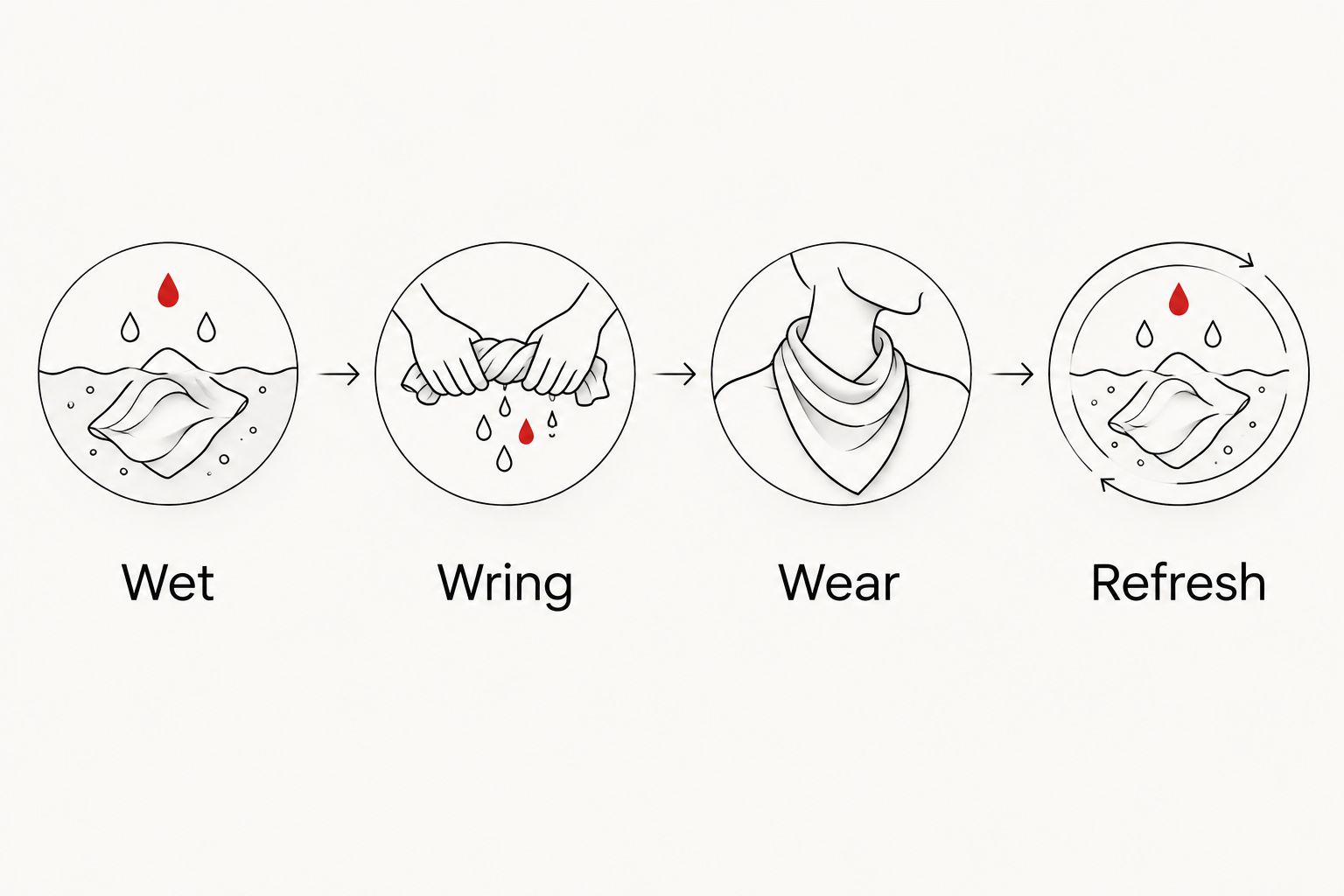
- How to use a cooling towel: wet, wring, wear away from the grill, and refresh as needed.
- Dead Meat Society’s Dead Cool Towel - Red DMS suits grillers who want a dedicated post-flame comfort accessory.
- Cooling towels depend on moisture and evaporation; humid, still air limits that effect.
- Keep your cooling towel separate from raw meat, food-prep surfaces, and hot equipment.
How to use a cooling towel while grilling
The useful routine is simple: get the towel damp, get yourself away from the heat, and give it contact with your skin. Don’t turn activation into a ceremony. For a 2026 cookout, the basics still beat an elaborate ritual.
If you want a dedicated towel for those breaks, the Dead Cool Towel - Red DMS is the assigned comfort accessory here. Its role is personal cooldown—not wiping grease, handling hot metal, or making another stretch beside the fire safe.
Wet
Use clean water to wet the towel, following the instructions supplied with it. Start with a clean towel, too; yesterday’s damp fabric shoved into a bag is not your opening move.
Do this somewhere separate from your meat-prep area. You want water on the towel, not raw-meat juices from a crowded counter or a sink full of dirty prep equipment.
Wring
Squeeze out excess water so the towel is damp rather than streaming. You want comfortable skin contact without water running down your shirt or dripping across the cooking station.
Keep that water off the grill and its controls. Activate the towel before approaching the station, or step away before refreshing it.
Wear
Rest the damp towel against your neck while you take a break away from the cooking equipment. Keep it loose and easy to remove, and keep loose fabric away from flames, hot lids, handles, and moving equipment.
Remove the towel before leaning over or reaching into the grill. A comfort accessory has no business dangling into the job.
Refresh
Rewet the towel when it becomes dry or stops feeling refreshing, then wring it again. Use clean water rather than dipping it into a shared drink cooler or any container used around raw food.
Follow the towel’s instructions if they specify an additional activation step. Don’t assume every cooling towel needs snapping, freezing, or a particular soaking time.
Why this matters: comfort is not heat protection
A damp towel can feel good against your skin. That does not make the air cooler, move you farther from the fire, or replace a break in a cooler place.
At a 2026 backyard cookout, treat the towel as an addition to shade, drinking water, and time away from heat—not a substitute for them. Feeling refreshed around your neck is not proof that continuing to cook is safe.
Make the break an actual break. Close or secure the grill as its instructions require, hand responsibility to another capable adult when needed, and move away from the heat source.
The burgers don’t need a martyr. They need someone paying attention.
Why a cooling towel’s effect varies
Evaporative cooling happens when water changes from liquid to vapor and takes heat with it. That explains why a damp towel behaves differently from one afternoon to the next, even when you use the same routine.
These factors affect what you feel:
- Humidity: Moist air slows evaporation. A muggy afternoon is less favorable for evaporative cooling than dry air.
- Air movement: Air moving across wet fabric supports evaporation. Still air gives that process less help.
- Moisture: A towel needs water for evaporative cooling. Once it dries, rewet it rather than expecting the same effect.
- Skin contact: Fabric resting against your neck feels different from fabric hanging over your shirt. Position it comfortably without wrapping it tightly.
- Nearby heat: Standing beside a hot cooker keeps exposing you to heat. Move away instead of asking a towel to cancel out the fire.
There is no useful universal countdown for refreshing a towel. Check its condition and your comfort rather than trusting a made-up cooling duration.
Where should you wear a cooling towel at a BBQ?
Use a cooling towel during a break away from the grill, with loose contact against your neck. Keep the ends clear of equipment, food, and anything you’re carrying.
A sensible place is a shaded resting spot outside the cooking area. Avoid blocking walkways or sitting where another person must carry hot food past your dangling towel.
Before you return to cooking, remove it and put it in a clean, designated place away from food. Don’t lay it over the grill handle, tuck it beside raw meat, or hang it where someone will mistake it for a cleanup rag.
If you prefer to hold it against your neck instead of draping it, do that during the break. Keep your hands available when you resume handling cooking equipment.
Does a cooling towel need ice water or snapping?
Clean water is the starting point; follow the towel’s own instructions for any additional activation step. Don’t invent a requirement for ice water, a snap count, or a soak duration.
The general principle is moisture plus evaporation. Colder water can initially feel colder, but that does not establish a longer cooling time or a protective benefit.
For your 2026 grilling setup, keep activation boring: a clean water source, a place to wring the towel, and somewhere away from the fire to use it. That is more useful than performing a dramatic towel snap over the potato salad.
If the label calls for snapping, do it away from people and uncovered food. If it does not, don’t treat internet choreography as a missing instruction.
When should you rewet a cooling towel?
Rewet a cooling towel when it dries or stops feeling refreshing, not after a fixed number of minutes. Conditions change, and a universal refresh schedule would ignore humidity, airflow, and how you wear it.
Step away from the station before adding water. Wring it again so you don’t return with a dripping towel, and check that it remains clean enough for skin contact.
If it has picked up grease, raw-meat juices, or dirt, stop using it and follow its cleaning instructions. Adding water does not clean contaminated fabric.
And if you feel unwell, stop cooking. Rewetting the towel is not the answer to dizziness, nausea, weakness, or a headache during heat exposure.
Keep the cooling towel out of food prep
Your cooling towel has a personal job. Give it a separate home from the surfaces and equipment used to prepare dinner.
Set it down away from raw-food packaging, serving areas, and the path of dirty utensils. Don’t use it to wipe your face and then wipe a prep counter; don’t use it to clean your hands after handling raw meat.
Wash your hands with soap and water after handling raw food. A damp towel is not a handwashing shortcut, no matter how convenient it looks when the grill starts demanding attention.
The same separation applies when somebody helps. Tell the crew which towel is yours and where it belongs, rather than expecting everyone to recognize its purpose halfway through a busy cookout.
One towel. One job. Keep this one personal.
Where the Dead Cool Towel - Red DMS fits
Dead Meat Society’s Dead Cool Towel - Red DMS is best for grillers who want a dedicated post-flame comfort accessory. That is the useful recommendation—not a claim that it protects you while working over heat.
The upside is a clear role in your routine: step away, use your towel, and take your break. The limitation is just as clear: it needs appropriate use, clean water, and separation from food handling, and it cannot replace heat-safety measures.
Dead Meat Society describes this cooling towel as a post-flame cooldown essential for pitmasters and tailgaters. Keep that post-flame distinction intact when you add it to your grilling accessories.
Before first use, read the supplied activation and care directions. Don’t assume a fabric composition, freezing method, or washing setting from the towel’s appearance.
Build the break into your cookout
For a 2026 cookout, decide where you’ll step away before the grill is loaded. Pick a spot outside the heat and traffic of the cooking station, with drinking water within reach.
If you’re feeding a crowd, agree on who can take over when you need a break. Give that person a clear handoff: what’s cooking, what needs attention, and what must stay separate from ready-to-eat food.
Use the towel once you’re away from the cooker. Don’t keep opening the lid from your resting spot or turn the break into another prep task.
When you return, put the towel aside before taking responsibility for hot equipment. Dead Meat Society is about feeding people together; sharing the workload leaves more room for that than trying to run the whole cookout alone.
Mistakes that turn a useful towel into a nuisance
A cooling towel should simplify your break, not create another thing to manage around the fire. Avoid these habits:
- Wearing it while leaning over the grill. Remove loose fabric before reaching toward hot equipment.
- Using it as a potholder. Wet fabric is not a substitute for equipment designed for handling hot items.
- Dunking it into the drink cooler. Use a separate clean water source instead.
- Treating it as a cleanup cloth. Keep skin-contact fabric away from grease and raw-food contamination.
- Chasing a promised runtime. Refresh according to the towel’s condition, not an unsupported cooling claim.
- Pushing through symptoms. Stop the task and get out of the heat when you feel unwell.
That last mistake matters most. Confusion, collapse, or loss of consciousness during heat exposure is an emergency; call 911 and begin cooling the person while help arrives.
FAQ
How do you activate a cooling towel before grilling?
Wet the cooling towel with clean water and wring out the excess, following its supplied instructions. Use it during a break away from the grill, and add any extra activation step only if the label directs it.
Do you have to snap a cooling towel to make it work?
Follow the towel’s instructions rather than assuming snapping is required. Evaporative cooling depends on moisture and evaporation; if snapping is directed, do it away from people and uncovered food.
Can I wear a cooling towel while standing over the grill?
Use the cooling towel during a break away from the grill instead. Remove loose fabric before leaning over or reaching toward flames and hot equipment.
How long does a cooling towel stay cool?
There is no universal cooling duration because humidity, airflow, moisture, and use affect the result. Rewet the towel when it dries or stops feeling refreshing, following its instructions.
Does a cooling towel prevent heat exhaustion?
A cooling towel is not protection against heat exhaustion. Use shade, drinking water, and breaks away from heat, and stop cooking if you feel unwell.
Can I use my cooling towel to wipe the BBQ counter?
Keep your cooling towel separate from BBQ cleanup and food preparation. A towel used against your skin should not also wipe raw-meat juices, grease, or serving surfaces.
Is the Dead Cool Towel - Red DMS a heat-protection towel?
The Dead Cool Towel - Red DMS is a post-flame comfort accessory, not heat protection. Do not use it to handle hot equipment or treat it as protection from flames or heat illness.
One last thing
The smartest towel routine starts before you get wet: choose the place where you’ll take your break. If that place is still beside the fire, you haven’t solved the main problem.
Make that your 2026 cookout rule. Step away first, refresh second, and let somebody else enjoy being in charge of dinner for a while.

