
Is a coaster with a bottle opener useful at a cookout?


Yes—a coaster bottle opener is useful at a cookout when guests are drinking capped bottles and need somewhere to set them between rounds. Its advantage is keeping the opener with the drink, but that convenience disappears if you bury the coaster under a bottle or leave it across the yard.
- A coaster bottle opener earns its place at cookouts serving capped bottles, not just cans.
- Dead Meat Society’s Dead Weight Coaster combines a non-slip PU leather base with a built-in bottle opener.
- Keep the drink station separate from raw-food prep and the hot grill.
- Lift the drink, open the bottle, collect the cap, and return the coaster to its spot.
Is a coaster with a bottle opener useful at a cookout?
Yes, when both jobs happen in the same place: opening a capped bottle and putting a drink down. That is the whole argument. No elaborate bar setup required.
Among Dead Meat Society’s grilling accessories, the Dead Weight Coaster pairs a non-slip PU leather base with a built-in bottle opener. The useful part is the combination, not a promise that a coaster will somehow run the party.
Use this simple sequence:
- Clear the coaster. Pick up the drink before reaching for the opener.
- Open the bottle. Keep the bottle upright and engage the opener with the cap as its design allows.
- Collect the cap. Put it straight into your designated waste spot.
- Return the coaster. Set it flat before putting the drink down again.
That gives you 2 jobs in 1 spot. The catch is equally straightforward: while someone is using the opener, the coaster is not available to hold a drink. A shared coaster also needs to stay where everyone can find it.
Why this matters
A cookout already has enough moving parts. Somebody wants the burgers flipped, somebody wants the sauce, and somebody has arrived with a bottle they cannot open.
The answer is not to turn the person at the grill into a roaming bartender. Put the opening job where the drinks live, then let the cook cook.
For your 2026 cookout setup, judge this accessory by the interruption it addresses. If capped bottles regularly send guests hunting through drawers, a visible built-in opener has a clear job. If everyone brings cans, the opener is mostly along for the ride.
Buy for the drinks you serve, not the party you imagine hosting. A useful accessory belongs in your actual routine.
What makes the integrated opener worth using?
The built-in opener makes sense when you want the opening tool to remain attached to something that already belongs on the table. It gives that coaster a second purpose without asking guests to locate a separate item.
Placement still decides whether the idea works. A coaster hidden beneath a tall bottle, tucked behind serving dishes, or carried to another seat is not an obvious opening station.
Keep the opening job visible
Before guests arrive, show whoever is helping with drinks where the opening feature is. Do not assume everyone recognizes it at a glance.
Then leave enough room to pick up and handle the coaster without reaching over another person's drink. The point is easy access, not a miniature obstacle course built from condiments and elbows.
Keep the coaster's first job intact
After opening a bottle, return the coaster flat to the table. Check that the drink sits securely rather than balancing it across an opening feature or an uneven edge.
A non-slip base is a useful feature, not permission to ignore the surface underneath. Start with a clean, level spot. A folding table that rocks still rocks with a coaster on it.
Be honest about the inconvenience
An integrated tool asks you to move the whole coaster whenever you need the opener. That is a minor interruption when opening your own bottle; it becomes awkward when another guest keeps reaching for the coaster beneath your drink.
Give a shared opening spot a clear role. Do not make somebody's occupied place setting the unofficial service counter for the entire yard.
How should you arrange the drink station?
Build the station around 3 zones: unopened drinks, opening space, and cap disposal. These are areas you assign, not extra products you need to buy.
Keep the route obvious. Guests should be able to take a bottle, open it, discard the cap, and move away without crossing the raw-food prep area.
Unopened drinks
Put unopened drinks where guests can reach them without stepping into the cook's working space. Keep bottle access separate from the place you are handling uncooked food.
For a 2026 backyard gathering, walk that route before anyone arrives. If getting a drink requires squeezing behind the person holding the grill tools, move the drinks—not the cook.
Opening space
Leave a clear patch of table for handling the bottle and coaster. Avoid the edge, where an elbow can send either overboard.
This is also where you decide whether the coaster belongs to one guest or serves the group. Either arrangement needs a consistent home. A wandering opener defeats the reason you put it there.
Cap disposal
Choose a cap-disposal spot beside the opening area. Tell guests where it is rather than hoping loose caps will organize themselves.
Do not pile caps on the coaster. That turns the place intended for a drink into a collection of small metal obstacles.
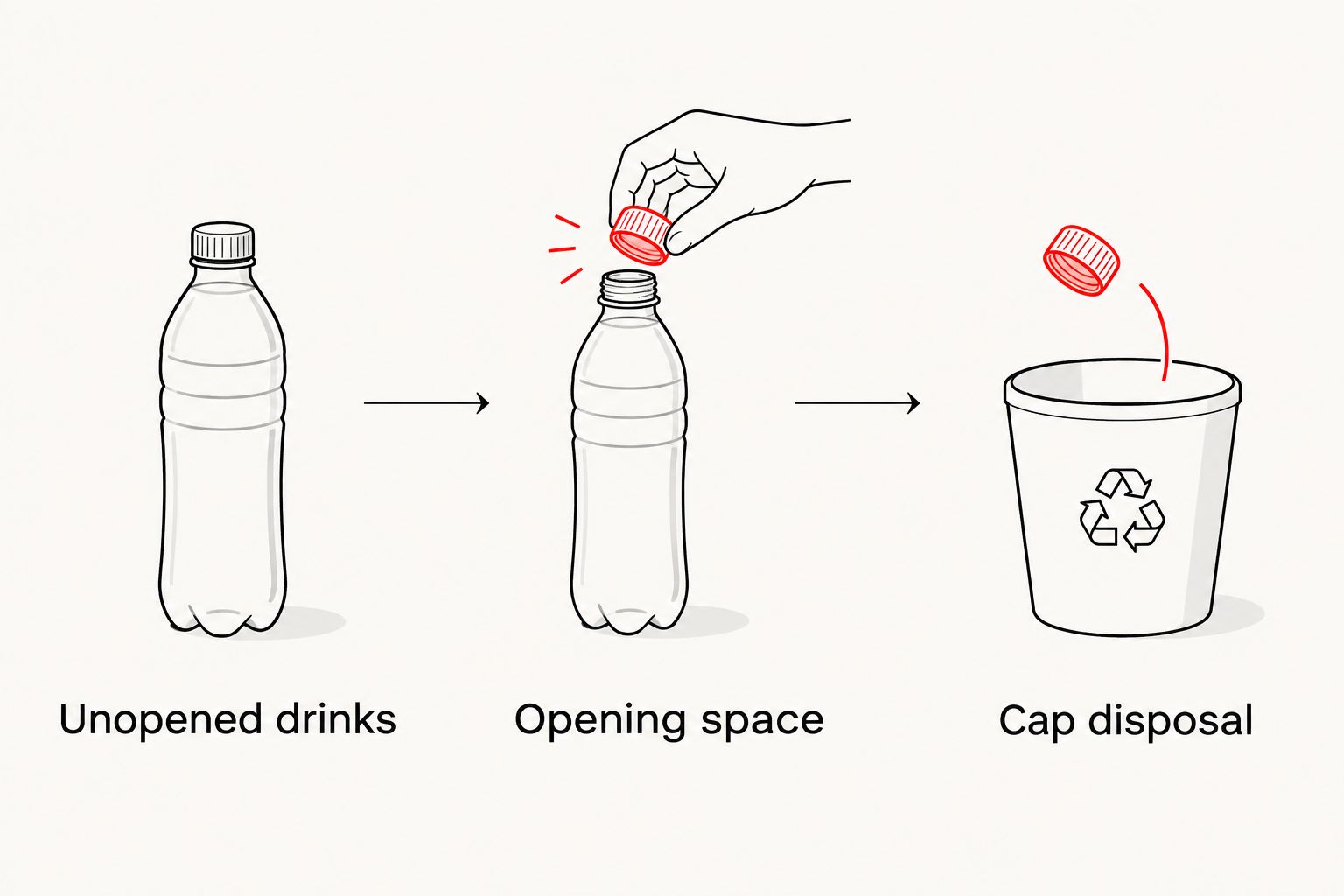
Why a coaster bottle opener's usefulness varies
The same accessory can be handy at one cookout and barely touched at another. These factors explain the difference without turning this into a shopping list:
- The bottle closure. A cap that requires an opener gives the integrated tool a purpose. A can does not.
- The coaster's location. Keeping it beside the drinks makes its opening function accessible; carrying it elsewhere removes that access.
- Whether the coaster is occupied. A drink sitting on it must move before you use the opener.
- The surface underneath. The supplied non-slip base is a feature, but your table still needs to provide a stable place to work.
- The handoff between guests. A shared opening spot needs a clear home so the next person knows where to go.
Notice what is not on that list: how impressive it looks in a product photo. Appearance can make an accessory enjoyable to own, but a built-in opener earns its keep through use.
For your 2026 hosting plans, answer the bottle question first. If you rarely serve bottles that need opening, do not invent a need just because an accessory has another function.
Who is the Dead Weight Coaster best for?
Dead Meat Society’s Dead Weight Coaster is best for cookout hosts who want a drink rest and bottle opener in the same accessory. Its supplied product description identifies a non-slip PU leather base and a built-in bottle opener.
That gives you a clear reason to consider it, and a clear limit. The combination is useful when both functions fit your habits; it is unnecessary to seek out the opening feature if your cookouts revolve around cans or already-open drinks.
The practical advantages are straightforward:
- The opener stays attached to the coaster.
- The same accessory serves the opening step and the drink-resting step.
- The base is described as non-slip.
The trade-offs deserve equal space:
- You have to lift a drink before using the coaster's opener.
- Sharing it means passing the coaster or keeping it at a common station.
- A non-slip base does not establish waterproofing, heat resistance, or compatibility with every tabletop.
Choose the combined function only if you will use the combined function. That is a better buying rule than collecting features with no assigned job.
How does it fit into a complete drink-service routine?
Opening is just the handoff between storage and serving. A well-placed coaster cannot rescue a setup where guests cannot reach the drinks or do not know where to leave their waste.
Before your 2026 cookout, work out how much ice you need alongside where guests will collect and open their drinks. Ice planning and opener placement solve different parts of the same service routine; neither substitutes for the other.
Then rehearse the handoff yourself. Pick up a bottle, find the opening feature, collect the cap, and put the drink down. If you have to move serving dishes or reach across food, change the layout.
Keep the area easy to reset throughout the cookout. Remove discarded packaging and collect stray caps before they take over the opening space.
This is not about making the backyard look like a staffed bar. It is about letting a guest get a drink without interrupting the person trying not to burn dinner.
Can you use a coaster bottle opener beside the grill?
Use a coaster bottle opener at the drink station, not on a hot grill surface. Keep it away from flames and out of the area where you handle raw meat.
A grill side shelf is not automatically a suitable drink station just because it is flat. Check the grill manufacturer's instructions about hot surfaces and required clearances, and keep your working space available for cooking.
The useful distinction is between being part of the cookout and being part of the cooking equipment. A drink accessory belongs at the gathering; that does not make it a hot-tool rest.
Is a coaster bottle opener useful if guests bring cans?
A coaster bottle opener still serves as a coaster when guests bring cans, but its opening feature has no job for those drinks. Judge the purchase on whether you want the coaster itself.
There is no need to stage a bottle-opening station for a can-only gathering. Put the drink rest where you will use it, keep the table clear, and carry on with the cookout.
How should you clean it after the cookout?
Follow the product's current care instructions before choosing a cleaning method. PU leather and a built-in opener do not establish that the whole item is dishwasher-safe, suitable for soaking, or compatible with a particular cleaner.
Do not leave caps or drink residue sitting on it after the gathering. Inspect the coaster and follow the stated care method before storing it.
For your 2026 cleanup routine, keep the same discipline you use when checking other accessories: material names are not care instructions. If you are considering machine washing, the related dishwasher-care guide below addresses that specific question.
FAQ
Is a coaster bottle opener actually useful at a BBQ?
A coaster bottle opener is useful at a BBQ when guests serve capped bottles and can easily reach the opening feature. Its value comes from keeping the opener with the drink-resting accessory.
How do you use a bottle opener built into a coaster?
Lift the drink off the coaster, keep the bottle upright, and engage the opener with the cap as the design allows. Collect the cap and return the coaster flat before setting the drink down.
Does a coaster bottle opener help if everyone drinks from cans?
A coaster bottle opener provides no opening benefit for cans. It still serves as a drink rest, so judge it on that function alone.
What does the Dead Weight Coaster combine?
The Dead Weight Coaster combines a non-slip PU leather base with a built-in bottle opener. Those supplied features do not establish heat resistance, weatherproofing, or dishwasher safety.
Can I use a coaster bottle opener as a hot grill-tool rest?
Do not treat a coaster bottle opener as a hot grill-tool rest without explicit product instructions permitting that use. Keep drink accessories separate from hot cooking equipment.
Where should I put a shared coaster bottle opener?
Put a shared coaster bottle opener beside the drinks on a clean, stable surface with room to handle a bottle. Keep cap disposal nearby and the raw-food prep area separate.
Can a coaster bottle opener go in the dishwasher?
Dishwasher suitability depends on the product's care instructions. Do not infer it from the presence of a metal opener or a PU leather base.
One last thing
Give the opener a home before the first bottle arrives. Tell the people helping you host, then keep that spot clear.
The best test is not whether a guest compliments it. It is whether they can open their drink, deal with the cap, and get back to the table without asking the cook to abandon the grill.

